- My Journey to Kailash and Mansarovar
- Bringing a Long-Held Wish to Life
- The Challenges Behind a Comfortable Expedition
- Twenty-Four People, One Wonderful Group
- Crossing into Tibet and Preparing for the Altitude
- The Sacred Waters of Mansarovar
- The First Sight of Mount Kailash
- The Extraordinary Beauty and Serenity of Tibet
- The People Behind the Journey
- The Journey Back and a Reminder of How Unpredictable Nature Can Be
- A Journey That Came Full Circle
My Journey to Kailash and Mansarovar
Some journeys take you to places you have never seen before. Others take you back to a place that has been a part of your life for years. But when you return, you experience it with an entirely different feeling.
My journey to Kailash and Mansarovar in August 2026 was one such experience. For me, Kailash is not just another destination. It is where a very important chapter of my life began.
Back in August 2012, I undertook my first cross-border international self-drive expedition, driving from India to Kailash and Mansarovar in an Indian-registered vehicle. That expedition went on to receive recognition in the Limca Book of Records for this achievement. It marked the beginning of a journey that would take Tushar and me across more than 50 countries on our World Trip, through countless land borders and, eventually, into organising hundreds of expeditions across the world. Yet, despite all those journeys, I never got the opportunity to return to Kailash and Mansarovar. That is what made coming back in August 2026 so personal.
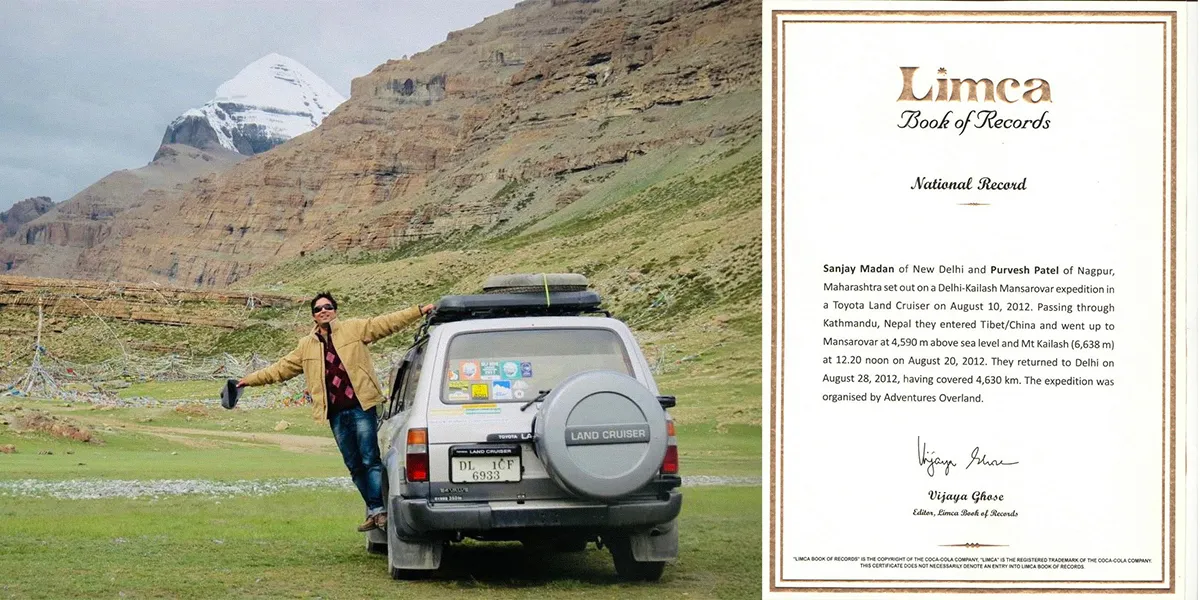
Over the years, I crossed many international borders on our expeditions, including several journeys through Nepal and Tibet. This time, I wasn't going there to achieve a milestone or complete another expedition. I was going back with a sense of gratitude, carrying more than a decade of memories and experiences with me. It felt like returning to the place where it all began.
Bringing a Long-Held Wish to Life
Over the years, many of our clients who knew about our journeys in Tibet had asked whether Adventures Overland could organise a Kailash Mansarovar Yatra. We had been exploring the possibility, but wanted to be certain that we could deliver the experience with the level of care, attention and service our guests expect.
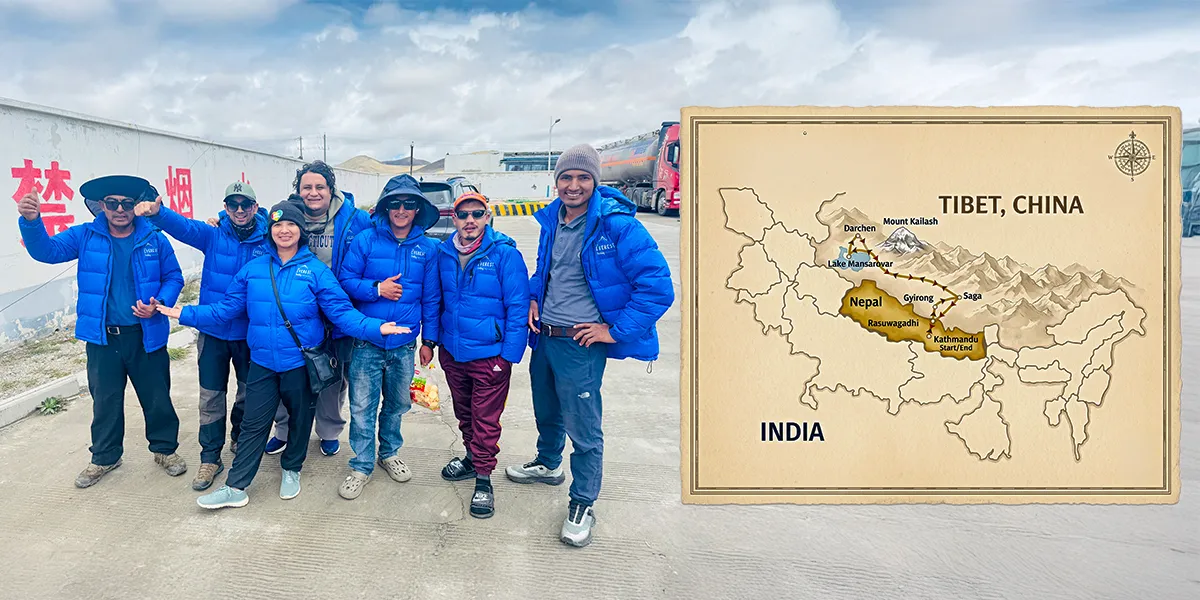
Finding the right local partner in Nepal was not easy. We spent considerable time researching and evaluating options before identifying a partner who understood our expectations and was willing to work closely with us. In a region where infrastructure is limited and logistics can change quickly, the local partner is not simply a supplier; the partner becomes an essential part of the expedition team.
Our August 2026 journey was planned over 13 nights and 14 days, with 24 participants. 18 participants travelled in the coach and six travelled in the van, along with crew members and the local Tibetan guide. A separate dedicated truck carried the kitchen staff and porters. Our Nepal partner and his wife also accompanied the group to personally oversee the arrangements.
The Challenges Behind a Comfortable Expedition
One of our biggest priorities was accommodation. Good hotels are extremely limited in this part of Tibet, particularly around Mansarovar. Even basic facilities can be a challenge, and public or common toilets are often in very poor condition. We therefore worked hard to ensure that participants had rooms with en-suite toilets and bathrooms at the overnight stops. We also arranged single-occupancy rooms for solo travellers, another difficult requirement to fulfil in this region. These may sound like basic expectations, but securing them in a remote destination takes considerable advance planning.
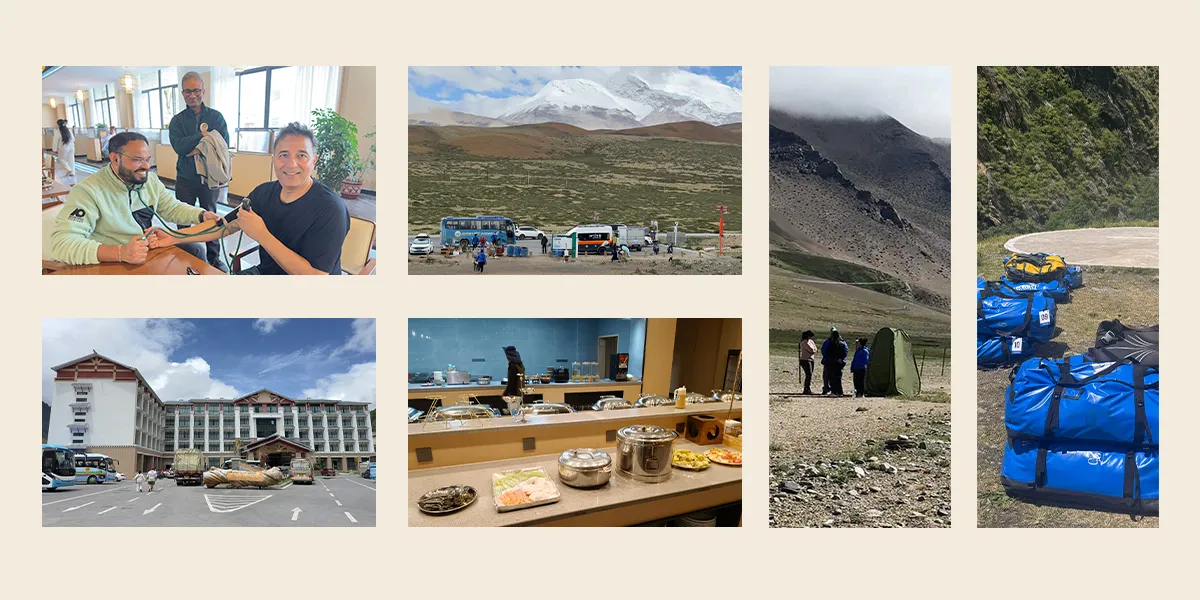
We were equally particular about road comfort. Dividing the participants between two vehicles gave everyone more space and made the long driving days more comfortable.
The support structure was deliberately strengthened. Our 13-member crew included the Adventures Overland team, drivers, the local Tibetan guide and the people responsible for food and on-ground logistics. The kitchen staff and porters travelled separately in the dedicated truck, which carried the equipment and provisions needed to prepare fresh meals along the route. Our Nepal partner's wider team also supported the arrangements on the ground. The intention was simple: our guests should be able to focus on the journey while a dedicated team took care of the details behind the scenes.
We customised the duffle bags and trip merchandise keeping the region's logistics, weather conditions and practical requirements in mind. Border crossings, permits and other formalities were coordinated well in advance. We wanted to minimise last-minute surprises and changes, which can unfortunately be common on expeditions through remote regions.
Food was another important part of the experience. A dedicated food truck and kitchen team travelled with us so that fresh Indian vegetarian meals could be prepared along the route, including in places where dependable food options are limited. Our Nepal partner and his wife personally oversaw these arrangements.
None of these things may sound extraordinary individually. But together, they make a meaningful difference. For us, premium travel is not simply about luxury hotels or expensive vehicles. It is about anticipating discomforts, planning thoughtfully, managing uncertainty and making sure guests feel looked after, especially when the destination itself presents so many challenges.
Twenty-Four People, One Wonderful Group
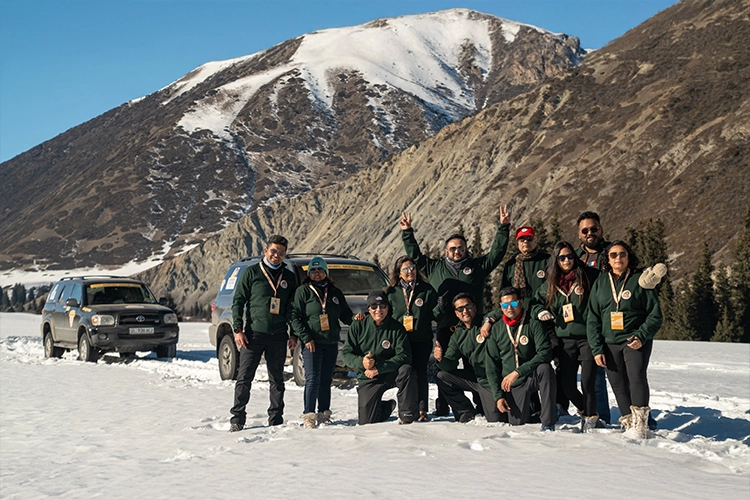
We spent our first two days in Kathmandu. The expedition began with a welcome dinner where all 24 participants introduced themselves and got to know one another. It was a wonderful mix of people from different walks of life: doctors, entrepreneurs, business owners and senior professionals. One of my school friends had also joined, which made the occasion even more special.
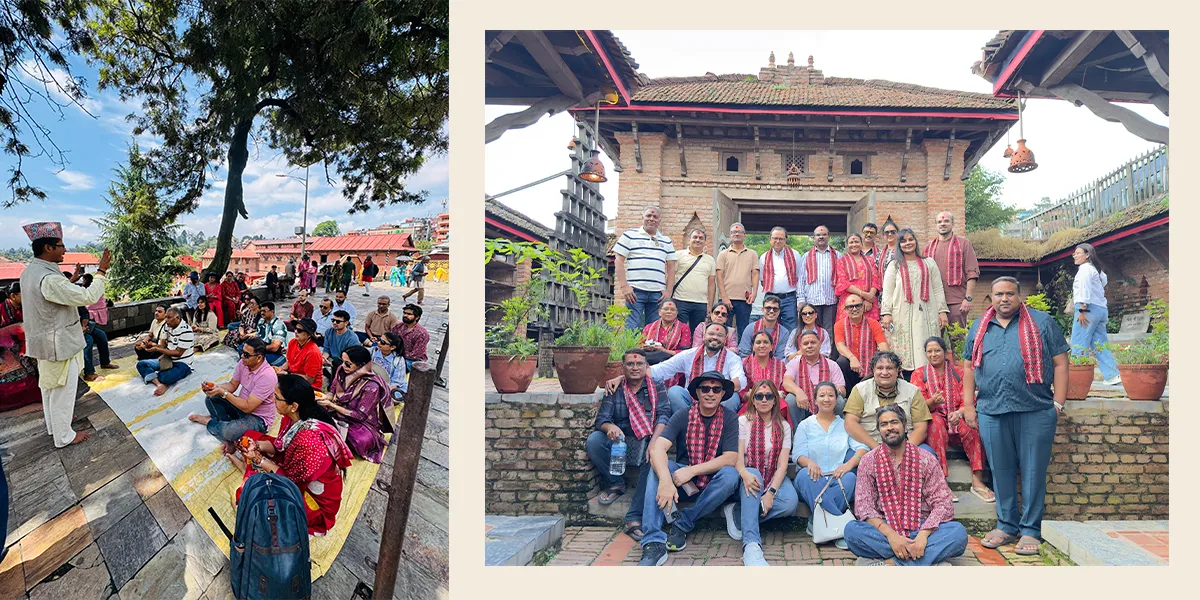
Most participants were repeat Adventures Overland guests. Many had travelled with us before, and there was already a sense of familiarity, trust and friendship. Even those meeting for the first time quickly connected.
Travelling to Kailash is challenging even under the best circumstances. There are long road journeys, high-altitude conditions, unpredictable weather and logistical complexities. But the attitude of the people travelling with us makes an enormous difference. Our group was patient, understanding, cooperative and supportive. Their positivity made difficult situations much easier for the entire team.
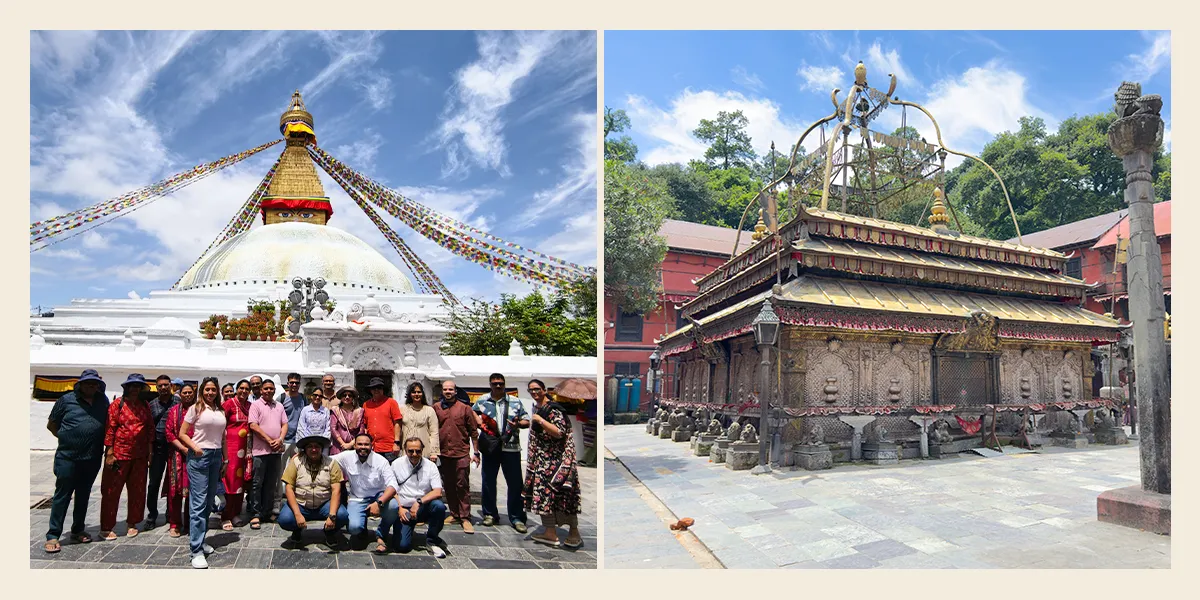
We don't take that trust, love and blessings for granted. It makes us feel even more responsible. Every time people choose to travel with us again, it reminds us to put in even more effort and continue raising our standards.
The following day, we visited Pashupatinath Temple to seek blessings for a successful journey. We offered prayers and performed a puja before continuing to Boudhanath Stupa. We also enjoyed a traditional Newari lunch, giving everyone a taste of Nepal's culture and hospitality before heading towards the mountains. It was a lovely way to begin a journey that was as much about faith and inner reflection as it was about travelling.
Crossing into Tibet and Preparing for the Altitude
From Kathmandu, we travelled towards the Nepal–China border and spent a night at Timure. The following day, we crossed the Rasuwagadhi–Gyirong border and entered Tibet.
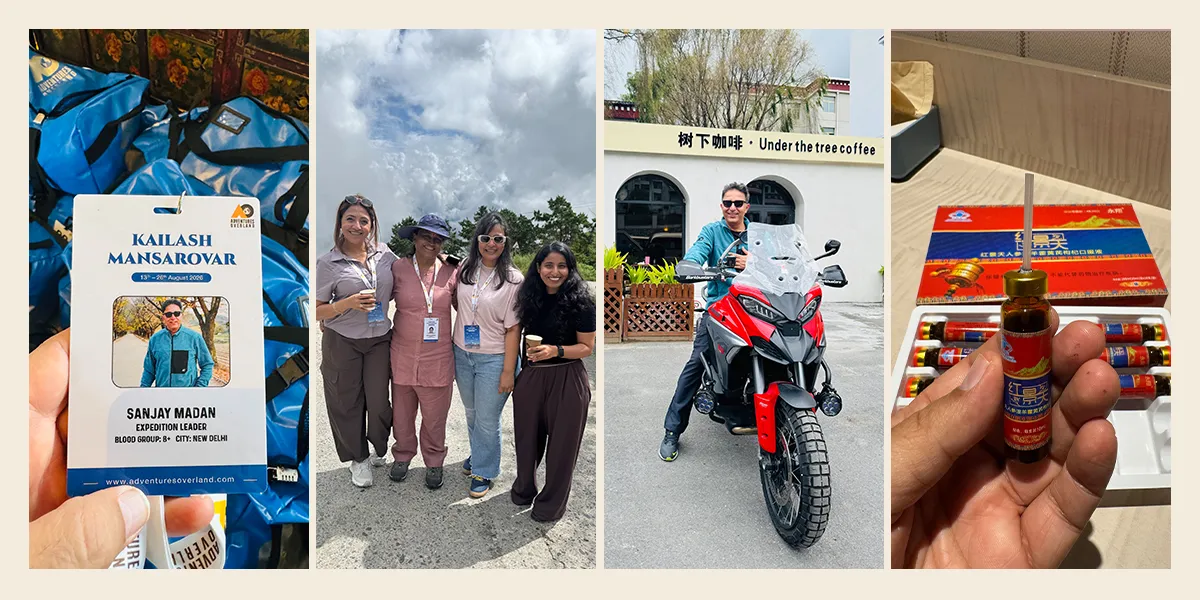
We then spent two nights in Gyirong, at approximately 2,850 metres, allowing the group time to rest and acclimatise before moving further into the high-altitude region. Our first high-altitude stay was in Saga, at approximately 4,550 metres. The gradual progression was an important part of our planning. At these elevations, altitude cannot be taken lightly, and giving the body time to adjust is essential.
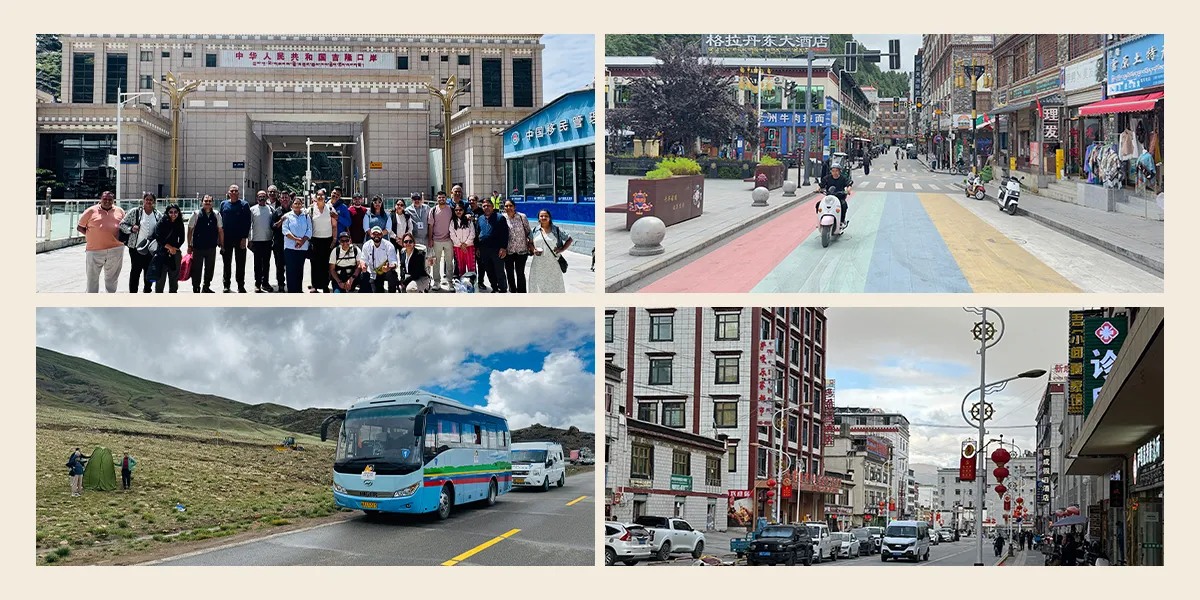
From Saga, we continued towards Lake Mansarovar, where we spent two nights. After our time at the lake, we travelled to Darchen, the settlement at the foothills of Mount Kailash, and spent another two nights there. The return journey followed the same general route, with overnight stays in Saga and Gyirong before crossing back into Nepal.
The Sacred Waters of Mansarovar
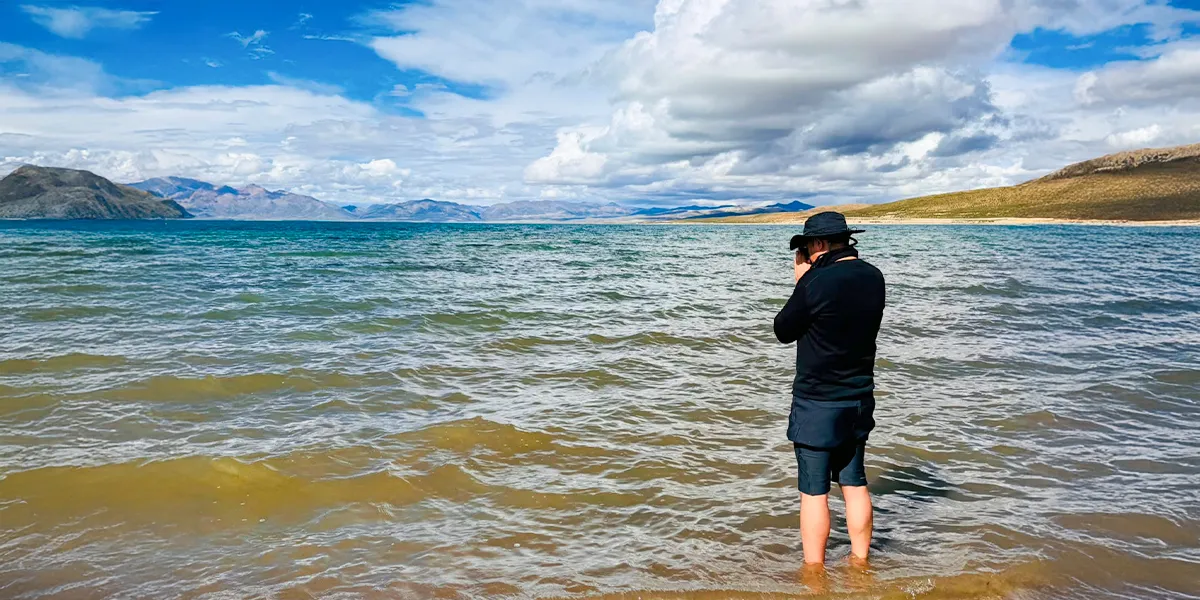
Our arrival at Lake Mansarovar was an experience in itself. The weather was cloudy, but the lake looked beautiful. The colours of the sunset were particularly spectacular, creating a magical setting across the water and surrounding landscape.
The following day, the skies cleared, and we were able to experience the lake in all its glory. We organised the full lake parikrama, giving everyone the opportunity to experience the sacred lake in its entirety. One of the most memorable moments was seeing the entire group step into the water. Everyone went knee-deep into the lake, touched the sacred waters and spent a few moments absorbing the experience.
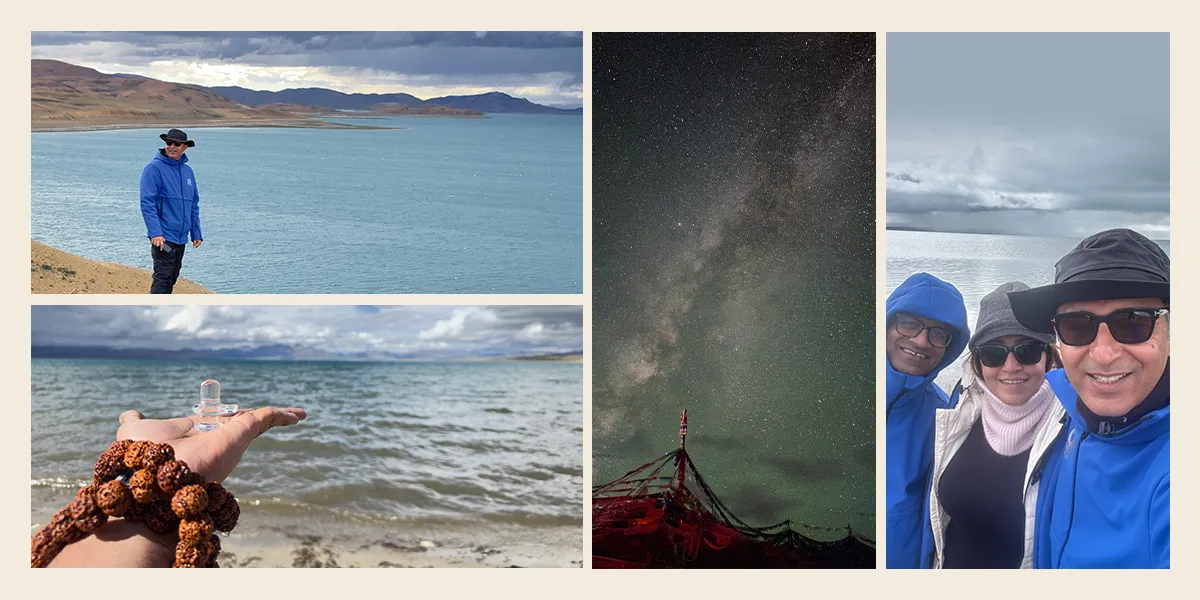
We had carried bottles all the way from Kathmandu specifically so that every participant could collect Mansarovar water and take it back home. It was lovely to see everyone carefully filling their bottles, knowing they would be carrying a little piece of this sacred place back with them.
We also spent time meditating by the lake, soaking in the surroundings and allowing ourselves to be present. For many of us, it was difficult to describe what we were feeling. It was less about words and more about faith, gratitude and a sense of connection.
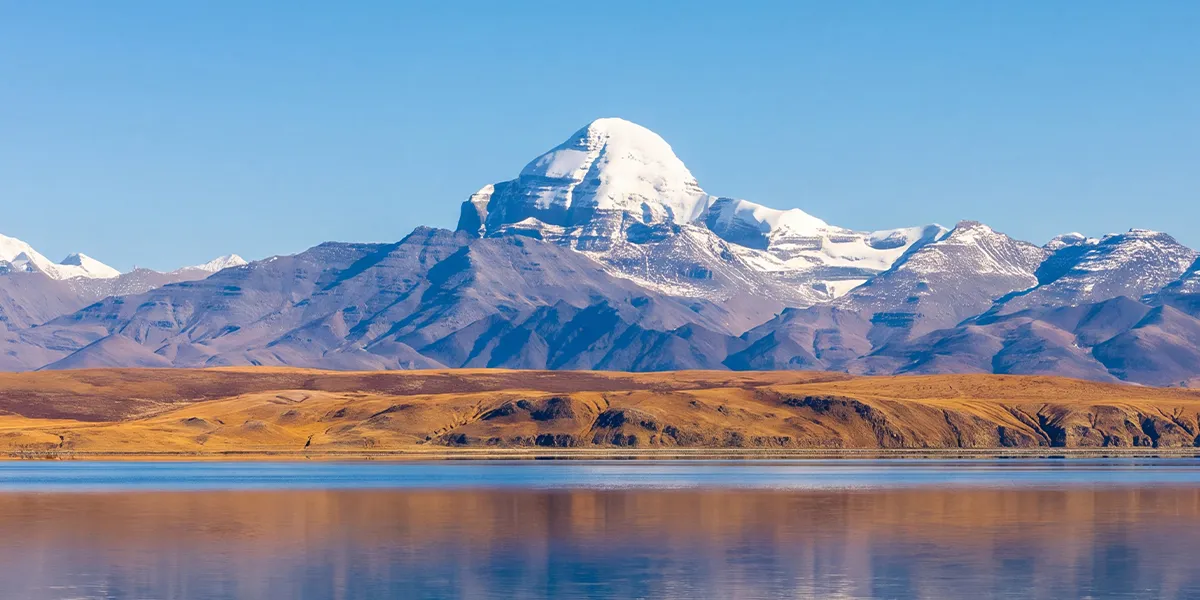
Mount Kailash is approximately 40 kilometres from Lake Mansarovar and can be seen from the lake on a clear day. The presence of the mountain adds another dimension to the experience of being at Mansarovar.
During our stay at Mansarovar, we woke at around 3 AM, during the hours traditionally associated with Brahma Muhurat, generally considered to be between approximately 3 AM and 5 AM. There is a belief that during this time, falling stars can be seen descending from the sky towards the waters of Mansarovar.
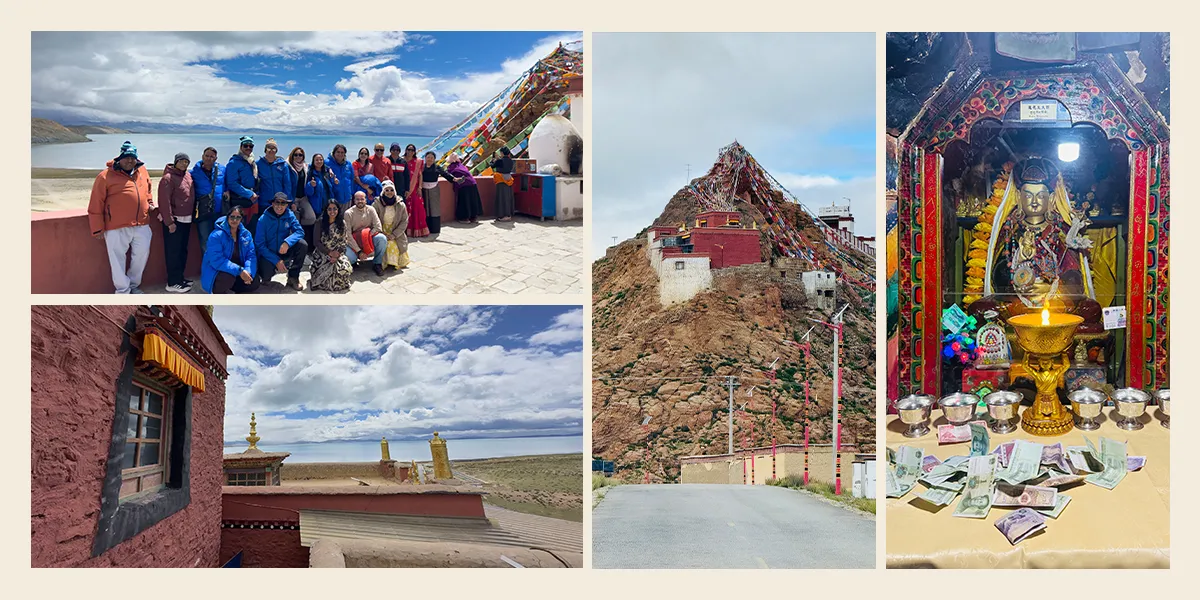
We went out to witness this, and the experience was simply magical. The sky was filled with stars, and we could see falling stars appearing to drop towards the lake. The entire landscape was still, with the sacred waters in front of us and an incredible canopy of stars above.
There was something else that made the night even more special. Mount Kailash was covered by clouds, but the clouds around its peak appeared unusually bright, almost as if there were a halo of light surrounding the top of the mountain. We noticed this glow on other nights too, whenever clouds covered the summit. Standing there in the darkness, looking at the stars and that luminous outline above Kailash, was an experience that will stay with me forever.
The First Sight of Mount Kailash
After Mansarovar, we continued towards Darchen, the small town at the foothills of Mount Kailash. We reached in the afternoon and spent two nights there. One of the most beautiful things about staying in Darchen is that you don't have to travel anywhere to see the mountain. You simply step out of your hotel, look ahead, and there it is—Mount Kailash standing majestically in front of you.
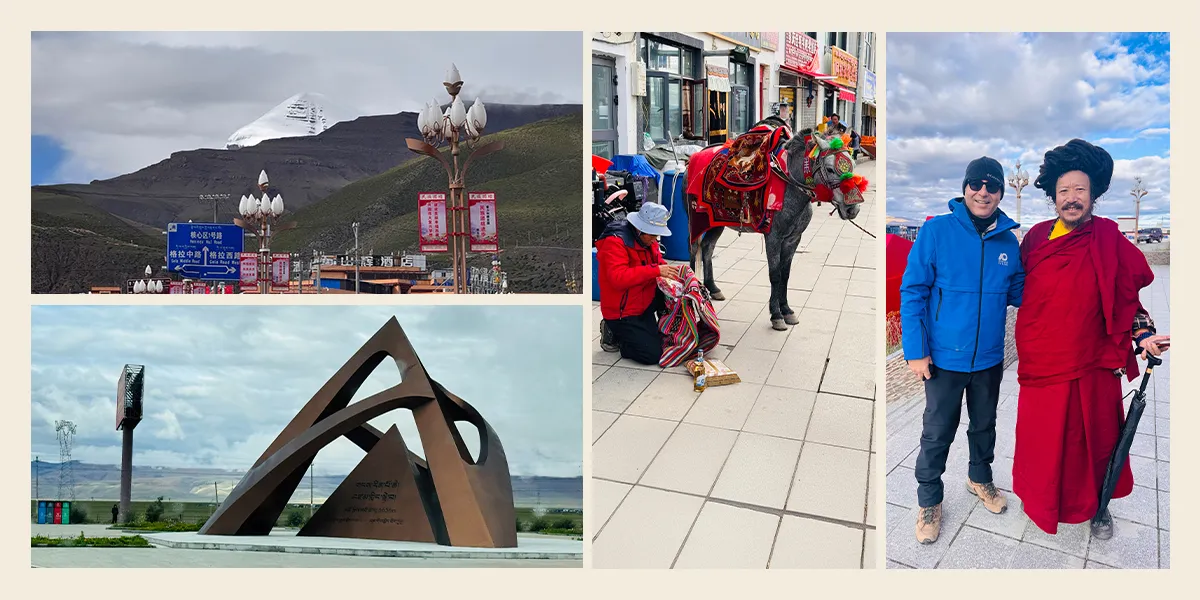
For me, that first sight was incredibly special. There is something humbling about being in the presence of a mountain that holds such deep spiritual significance for millions of people. You have read about it, seen photographs and heard stories, but when you finally stand there and see it with your own eyes, the experience is entirely different.
The following day, we visited Yama Dwar, where we spent approximately three to four hours in front of Mount Kailash. We deliberately kept this time free rather than filling it with activities. People sat quietly, meditated, spoke to one another or simply gazed at the mountain. There was no particular agenda. Everyone was happy just being there.
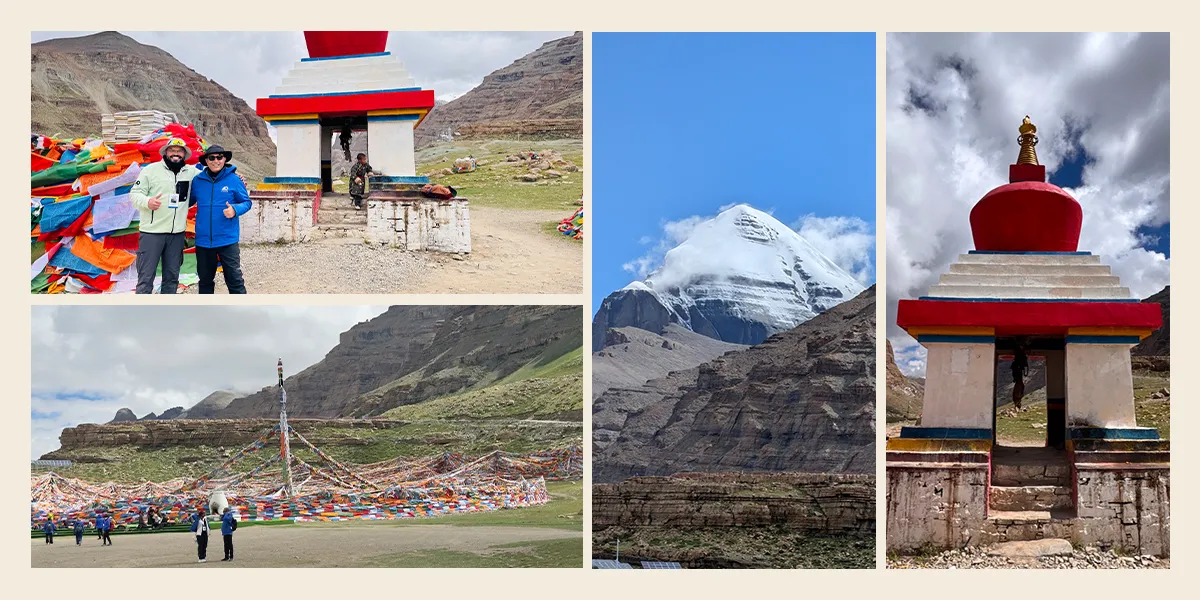
We had consciously decided not to organise the Mount Kailash parikrama on this first expedition. The parikrama is an extremely demanding undertaking, requiring a very different level of physical fitness, preparation and acclimatisation. Given the nature of our first group journey, we felt it was more responsible not to include it. Participants appreciated this decision. The objective was not to push everyone into a physically demanding undertaking, but to allow them to experience Mansarovar and Mount Kailash safely and meaningfully. Knowing when not to do something is just as important as knowing what to offer.
The Extraordinary Beauty and Serenity of Tibet
Beyond the spiritual significance of Kailash and Mansarovar, I have always found the Tibetan landscape extraordinary. It is one of the most beautiful and serene terrains I have experienced anywhere in the world. The sheer scale, openness, silence and remoteness create a feeling that is difficult to find elsewhere.
I have photographs from this journey where I am standing at a particular spot, looking across a landscape that seems to contain everything in one frame: sand dunes, patches of green grass, water, rolling hills, towering mountains, snow, clouds and an endless sky. It is almost unbelievable how these contrasting elements come together so naturally.
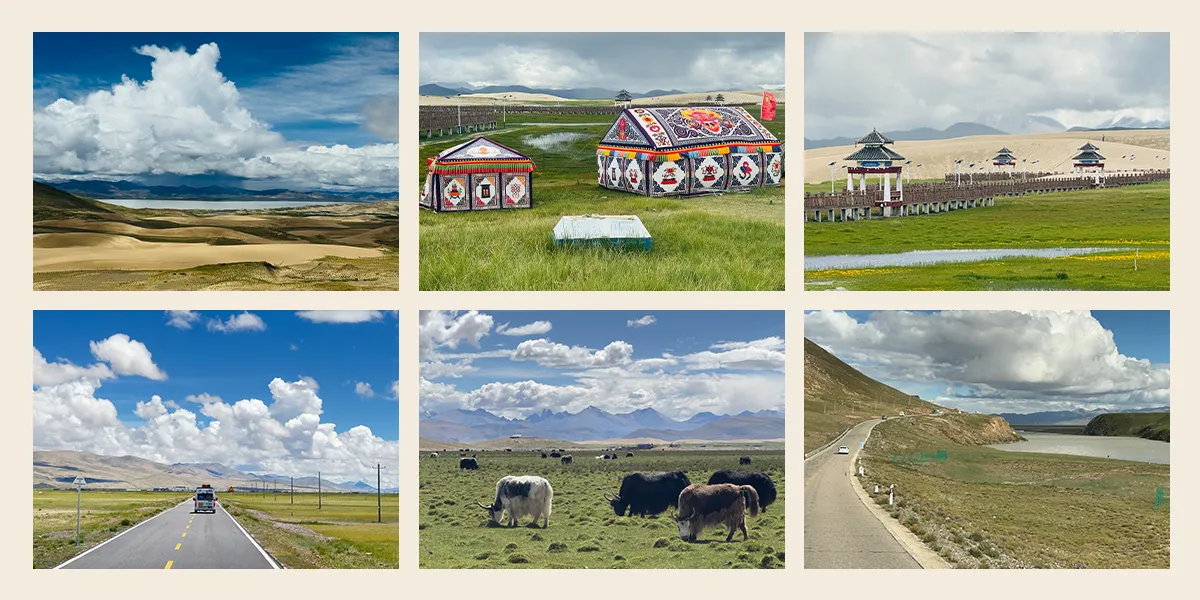
You can drive for hours through vast open spaces, surrounded by mountains and dramatic terrain, and come across a stretch of green or a beautiful body of water that changes the entire scene. The landscape keeps surprising you. And somewhere in this immense, remote and beautiful land stands Mount Kailash.
For me, there is a deep connection between the spirituality of this region and its natural beauty. You don't necessarily need to be doing something religious every moment to feel it. Sometimes, looking at the mountains, sitting quietly or watching the clouds move across the sky is enough. The landscape itself inspires a sense of humility.
The People Behind the Journey
An expedition of this nature is never the effort of one person or one team. It takes months of preparation, coordination and countless small decisions to make the experience work.
I would particularly like to acknowledge Gourab, who played a very important role throughout the journey. His experience in high-altitude mountaineering and trekking was valuable, but what stood out even more was his commitment to the group. He was attentive to participants' health, kept monitoring how people were adjusting to the altitude and was always available when someone needed support. His calm and responsible approach gave us confidence.
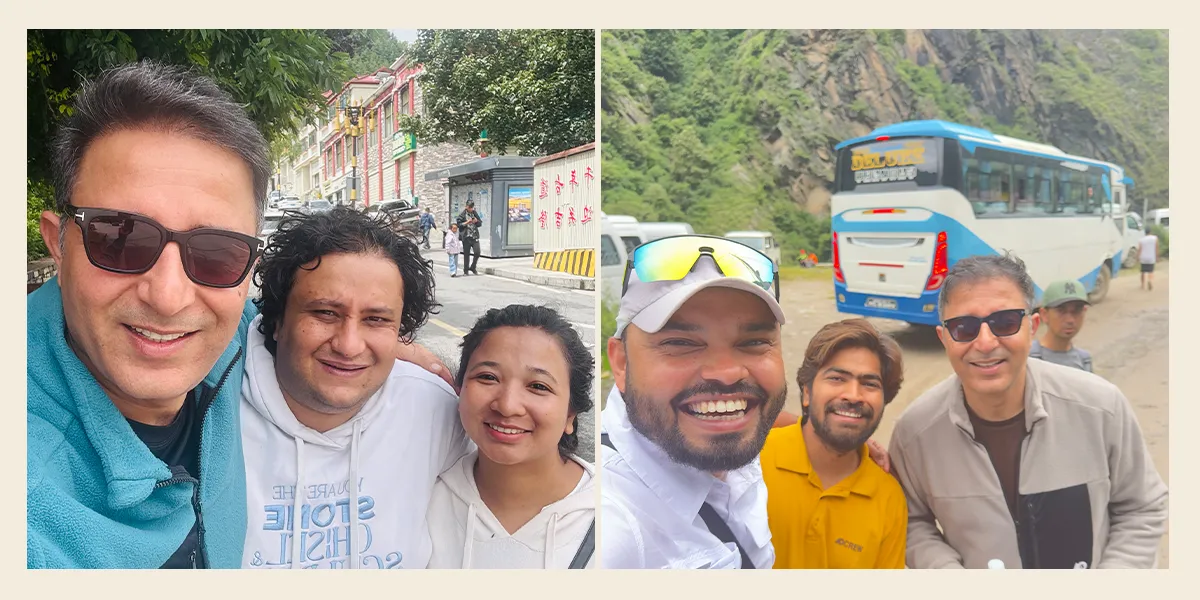
Our Nepal partner and his wife also deserve special appreciation. Managing fresh Indian vegetarian meals in such remote locations, with a dedicated kitchen team and food truck, was a substantial undertaking. Their involvement helped us maintain the comfort and standards we wanted to offer our guests.
Gulab also deserves a special mention. He travelled with us from India into Nepal and accompanied the group up to the Rasuwagadhi–Gyirong border before returning to India. He had travelled through the same border region with us during our Road to London expeditions in 2025 and 2026, and his familiarity with the route and border procedures was valuable.
And, of course, the entire Adventures Overland crew and local support team worked together to make the journey possible. It is easy to remember the beautiful destinations, but the people working behind the scenes are often the reason those experiences come together.
The Journey Back and a Reminder of How Unpredictable Nature Can Be
After completing our time at Darchen, we began our return journey, retracing our route through Saga and Gyirong. We spent a night at each before crossing back into Nepal.
The road conditions were not particularly good, and after discussing the situation with the group, there was a collective preference to avoid the long road journey from the border region to Kathmandu and return by helicopter. It was a practical decision based on the road conditions and the group's comfort. However, arranging the helicopters turned into a race against time.
We had initially booked two helicopters, scheduled to operate with departures at 30-minute intervals. The plan was for four people to fly out every 30 minutes, which meant that all 28 people should have reached Kathmandu within approximately three and a half hours. However, just as we were preparing for the transfer, we were informed that the fuel pump on the second helicopter was not functioning properly. This meant that only one helicopter would be available, and transporting everyone with that arrangement was expected to take around seven hours. With the 4 PM flying cut-off approaching, that was simply not workable. We contacted another helicopter company to arrange additional support. The new company sent two helicopters, and the original company also arranged two. Suddenly, we had four helicopters operating in the area.
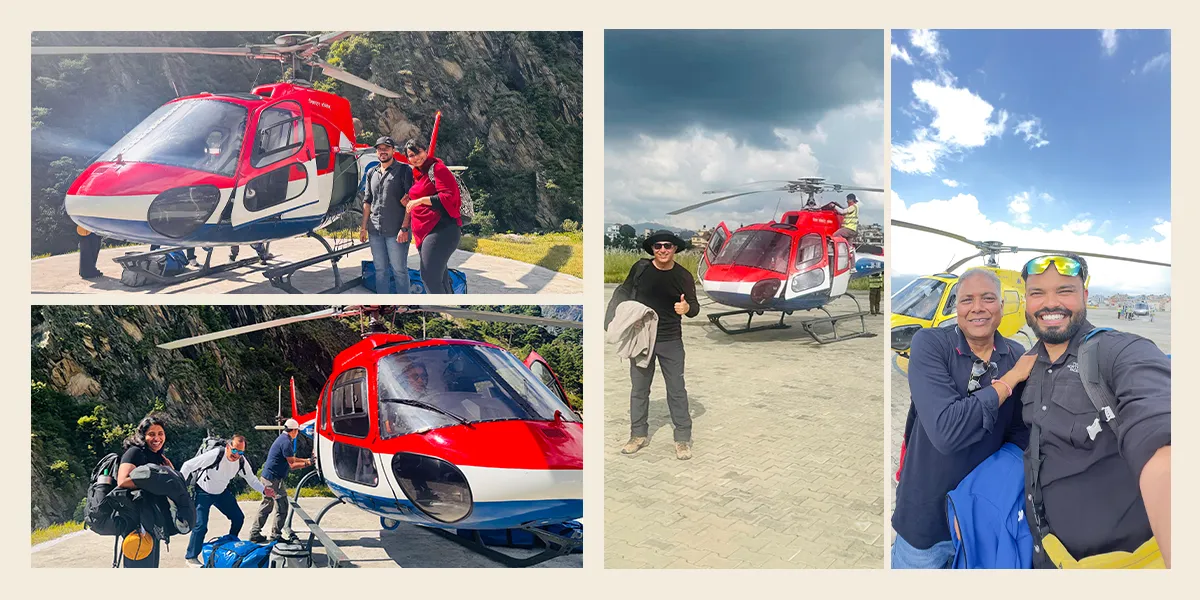
Each helicopter could carry four passengers at a time, and between the four helicopters, we completed seven flights to transport all 28 people to Kathmandu. They operated in quick succession, with helicopters arriving and departing one after another. At times, one was already waiting in the air while another was boarding passengers on the ground. It was almost like a scene from a movie. In a short span of time, all 28 people were safely transported to Kathmandu.
But what happened the following day put everything into perspective. On 26 August, devastating flash floods struck the region. Roads and critical infrastructure around the border were severely damaged, including areas that we had travelled through and facilities that had been used during our return. The floods claimed lives, and some people were reported missing. Our heartfelt condolences go out to everyone who lost loved ones. We pray that the departed souls rest in peace, and we continue to hope and pray for the safe return of those who were missing.
We had left the region approximately 16 hours before the tragedy. It is difficult to put into words how fortunate we feel to have returned safely, while our hearts remain with the people who were there when the floods struck and with the families affected. When you travel through the mountains, you are constantly reminded that nature is far more powerful than any plan we can make.
It was also a reminder of the responsibility we carry when taking people into remote and challenging destinations. An expedition is not successful simply because the itinerary has been completed. It is successful when people are looked after, decisions are made responsibly and everyone returns safely.
A Journey That Came Full Circle
As I look back at August 2026, I find myself thinking about the young man who set out on his first cross-border international self-drive expedition in August 2012. At that time, I could not have imagined how much that one journey would influence my life. It opened up a world of possibilities and eventually became part of the story of Adventures Overland.
Returning to the same region after so many years, this time with a group of 24 participants and our own team, was an emotional experience. In 2012, it was about the excitement of an ambitious expedition and the thrill of reaching a destination in an Indian-registered vehicle. In 2026, it was about gratitude, responsibility and sharing that experience with others.
The warmth, patience, trust and affection of this group made a challenging expedition so much more enjoyable. I am grateful to every participant, our local partners and the entire crew who worked behind the scenes to make it happen.
We are now working towards our next Kailash Mansarovar journeys in 2027, with a different proposed route beginning with a flight to Lhasa. The plan is to travel gradually through Tibet, including Shigatse, Tingri, Everest Base Camp and Rongbuk Monastery, before continuing towards Saga, Mansarovar and Darchen. This remains a proposed itinerary, subject to the necessary permissions and operational confirmations.
Beyond the routes, logistics and itineraries, what I will remember most about August 2026 are the moments that cannot be put into a programme: touching the waters of Mansarovar, watching the stars before sunrise, seeing Mount Kailash from Darchen, sitting quietly at Yama Dwar and looking at the extraordinary Tibetan landscape.
And, above all, the feeling of being back where my journey began.
Some places leave an impression on you. Some become a part of you. For me, Kailash and Mansarovar will always be both.
With gratitude.
Frequently Asked Questions
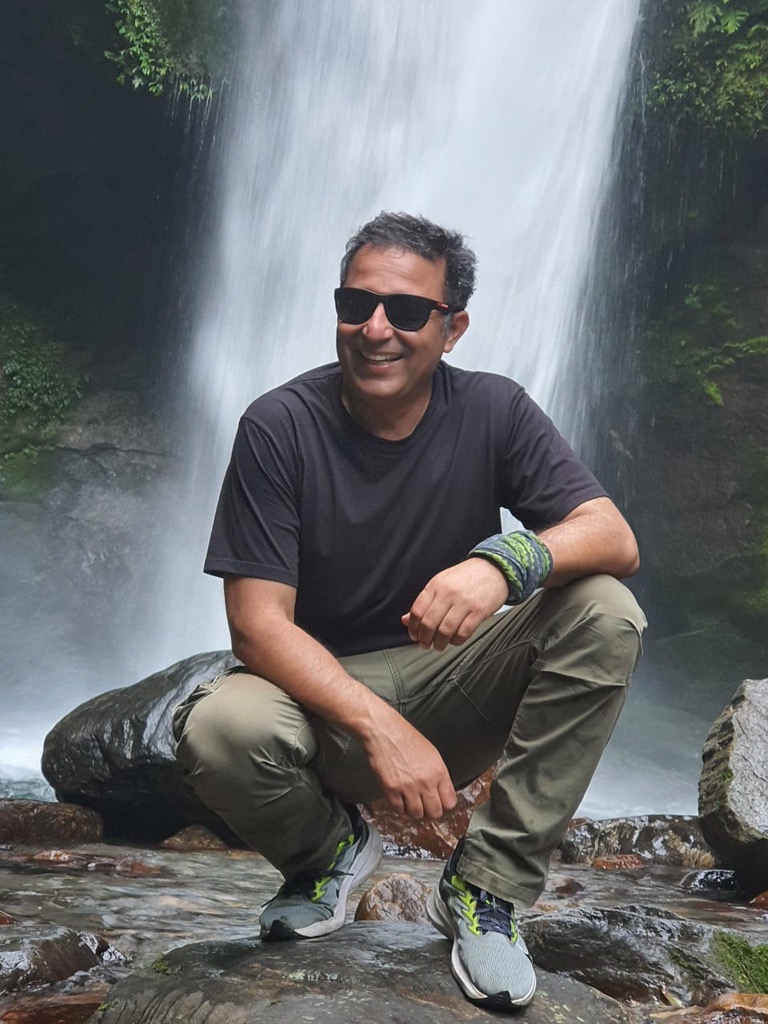
Written by
Sanjay Madan
Co‑founder & Expedition Leader
Sanjay has led overland convoys across five continents and co‑founded Adventures Overland to share that same sense of discovery with fellow travellers. He believes the best routes are the ones that teach you something about yourself.