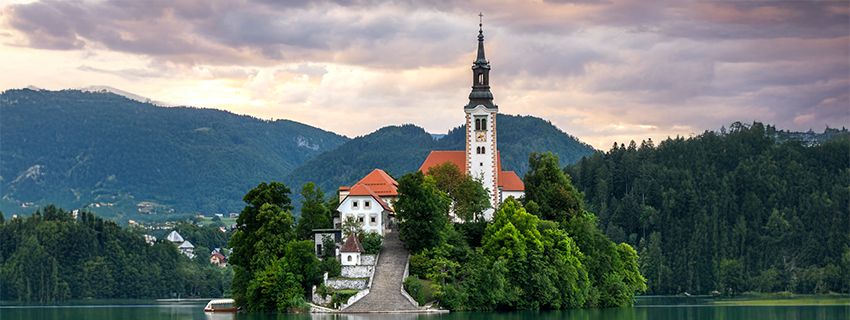
Lake Bled (Blejsko Jezero) lies about 50–55 km northwest of Ljubljana, in the scenic Upper Carniola region. The emerald-green lake has a small island with a baroque church and a medieval castle on a rocky bluff. Beneath its quiet charm is a rich history: the Bled area was settled in the Stone Age, and the first written mention of Bled Castle dates to 1011, when Emperor Henry II granted the castle to a Bishop of Brixen.
- Local Transport: In Bled town, most sights are within walking or cycling distance. The main bus station (Bled Union) is at the lake’s eastern end, a few minutes’ walk from the centre. Car rentals are available in Bled and Ljubljana. Within Bled, hop-on tourist trains (tourist train that goes around the lake) and horse-drawn carriage rides also circle the lake. During tourist season, local buses run between Bled’s neighbourhoods and to nearby villages.
- History & Culture: The local culture blends Alpine and Slavic heritage. Bled Castle houses a museum with artefacts from the region’s past, and visitors can see a medieval printing press and a smithy. The nearby Kirnja Gora village and Bohinj Plateau have Alpine farms and folk museums. The famous “Bled Cream Cake” (kremna rezina) was invented in 1953 at the Hotel Park, and sampling it is a national rite. Traditional events include the Bled Days (Avgustjanski) Festival in August, culminating in Bled Night, when locals light 10,000 tiny candles on the lake, and the Winter Fairytale Festival in December, with markets and an ice rink.
- Local Cuisine: Alpine cuisine dominates Bled’s dining. Expect rich stews (venison, beef goulash), grilled trout from the lake, and smoked ham with horseradish. Popular desserts include the original Bled Cream Cake and potica (nut roll). Try local dairy specialities: Bled-made cheeses and sour cream. Bled has a few farm-to-table izbas (rustic inns) where homegrown produce and cheese are served.
- Travel Tips & Packing: Weather in Bled can change quickly. Summer (Jun–Aug) is warm and pleasant for swimming; evenings may be cooler. Evenings in shoulder seasons (May, Sep) can dip to 10–15 °C, so pack layers and a rain jacket (May is Slovenia’s rainiest month).
In winter, bring warm layers, as nighttime temps often fall below freezing. Sturdy walking shoes are essential (for the hill paths and castle cobbles). Sun protection is important even on cool days, as the lake reflects sunlight. If you plan to swim or kayak, bring swimwear and a quick-dry towel; life jackets and boat rentals are available lakeside.
Safety: Bled is very safe and family-friendly. Standard precautions (lock bikes, watch children near water) suffice. Drinking water from taps is potable. As a reminder, if you plan to fly a drone or fish, check local permit requirements (e.g. a fishing permit is required in Slovenia, and drones need clearances).
Things to do in Lake Bled
Lake Bled offers a wealth of activities for every traveller. Whether you crave adventure, relaxation or cultural immersion, each day can be filled with memorable experiences.
- Row to Bled Island: No visit to Bled is complete without a boat trip to the island church. Hire a pletna, which is a traditional wooden boat – an oarsman guides you across the calm lake to the island’s dock. On the island, climb 99 stone steps to the Church of the Assumption (wedding site since medieval times). Tradition dictates that grooms carry brides up these steps, and ringing the church bell three times grants a wish. The view back toward Bled Castle and the Alps is stunning.
Tip: Boat rides fill up, so go early. If on a budget or on a leisurely pace, you can also rent a rowboat or SUP by the lakeshore and explore the island independently.
- Visit Bled Castle: Perched atop a sheer 130 m cliff, Bled Castle (Blejski Grad) looks over the lake like a painting. It’s Slovenia’s oldest castle and was once the seat of the Prince-Bishops. Today, it houses an interactive history museum, a printing works, a chapel and a wine cellar. The castle’s main draw is the panoramic terrace café: sip a drink or cream cake while gazing over the island and church below.
- Hike/Walk Panoramic Trails: The area above Bled offers easy hikes with big rewards. Two popular climbs are Ojstrica and Mala Osojnica (on the lake’s western shore). These hikes start near the little dock at Velika Zaka and are about 1–1.5 km long, with modest elevation gain. Once on top, you get one of the most famous viewpoints in Slovenia: the entire lake, island and castle laid out below with the Julian Alps beyond. Pack water and wear sturdy shoes. Even a 15-minute walk up the forest trail is worth it for the photos. In summer, these trails are shaded; in spring/fall, you’ll enjoy the cool crisp air.
- Stroll or Cycle Around the Lake: A well-maintained path circles Lake Bled (6 km long). A leisurely walk takes about 1–1.5 hours, and you’ll pass several graceful villas, manicured parks, and viewpoints. Along the way is the famous Hotel Vila Bled (Tito’s former villa, now a café where he once invited guests for coffee). Biking is a popular alternative: rental shops offer mountain or electric bikes. Cycling the loop may take 45–60 minutes. Several benches along the shore invite rest stops, perfect for a picnic with lake views.
Note: horses also offer carriage rides along the path if you want a slow, guided tour.
- Vintgar Gorge: Just a short drive north of Bled is the spectacular Vintgar Gorge. This shaded 1.6 km wooden boardwalk hike follows the turquoise Radovna River through steep limestone canyons, ending at a 13 m waterfall. It’s a must-see for nature lovers. Wear good shoes as the trail can be slippery, and reserve extra time on summer weekends (it can be crowded).
- Water Activities & Swimming: In warm months, Lake Bled is delightful for a dip. The northern edge features public Castle Beach, like Grajsko kopališče, with changing cabins, docks, and a slide. Lifeguards supervise the busy swimming area. Rental boats (rowboats, pedalos, kayaks) line the shore near the beach and in town. Fishing enthusiasts can catch trout here. The emerald water typically reaches the mid-20s °C in summer. In mid-winter, the lake can freeze.
- Thermal Spa & Wellness: Bled’s waters are naturally warm, heated by underground springs. Relax at one of the thermal spa pools overlooking the lake. The most famous is at the Grand Hotel Toplice, where an indoor pool is fed by 22 °C thermal water. Other hotels also have wellness centres. A swim or a steam in these pools is especially lovely on a cool or rainy day, as you can lounge with a view of the misty lake and castle in the distance.
- Local Events & Culture: Check the events calendar. Bled hosts cultural activities year-round. In summer (Jul/Aug), catch the Okarina Festival (world-class folk music) and the nightly lit egg tradition during Bled Days. In December, Bled transforms into a “Winter Fairytale” with a festive market, holiday lights, concerts and an outdoor skating rink. On Jan 1st, locals ring the old bell and form a human “Circle of Friendship” on the lake. Even if there's no festival, slow food fairs and local craft stalls often pop up on weekends.
- Cultural Insights: Learn about Slovenian customs while you’re here. Bled’s town museum and a small museum in the castle print shop have exhibits on local history. Just outside Bled, the village of Ribno is home to Klemenšek farm, a family-run cheese maker. Try the koroški cheese. Visit a pletna boat workshop or speak with an oarsman to hear tales of old.
- A fun tradition: making and crossing the “Circle of Friendship” walkway around the lake by lantern-light, done by locals during the Winter Fairytale.
- Photography & Relaxation: Simply lounging by the lake is an activity in itself. Swing on one of the lakeside hammocks, watch fishermen on the pier, or feed the swans. For photographers, sunrise over the island or sunset behind the castle are quintessential shots. If you’re a writer or artist, bring a sketchbook as the reflections in the water and quiet mornings are very inspiring.
Lake Bled, Slovenia Attractions
Beyond the lake’s edge, the Bled region offers other attractions and nearby sights worth visiting.
- Bled Island & Church: The only island on the lake, “Blejski otok,” is home to the Church of the Assumption, a pilgrimage site. It stands on a hillock – in ancient times, a Slavic temple stood here. The tiny church is often adorned with wedding decorations. Iconic: the 99 steps leading up from the dock (each carved from marble). The church’s ornate interior and bell tower (gain access) are lovely, and you can even get your names engraved on the church benches for a fee.
- Bled Castle (Blejski Grad): Dominating the west shore, the terracotta-roofed castle is a medieval stronghold. It’s listed among Slovenia’s top 5 sights. Aside from the museum and chapel, don’t miss the castle print shop, where you can operate a hand-press or try a glass of local wine in the cellar. Children will enjoy the old mill and soldiers’ quarters recreated inside. Of course, the sweeping view of Lake Bled and its backdrop is the main attraction.
- Vintgar Gorge: This UNESCO-listed natural wonder lies 4 km northwest of Bled (a park and a short bus ride are required). The gorge is the original channel where villagers used to drive logs downstream to sawmills. Today, a boardwalk takes visitors through emerald pools and past small waterfalls. It’s very photogenic; have your camera ready. The gorge walk is flat but long, so wear good walking shoes. At the far end, a rustic bridge marks the turnaround point near the Šum waterfall. A modest entry fee covers site upkeep (there’s also a short climb back).
- Julian Alps & Triglav National Park: Bled serves as a gateway to Slovenia’s high mountains. Not far is Vogel Mountain, which offers hiking and summer alpine meadows, and nearby Triglav National Park with hiking routes of all levels. The Julian Alps with 2,800m Triglav at their heart are visible from Bled’s outlooks. Skiers can reach Vogel and Kranjska Gora in winter. Even without summiting, many visitors enjoy scenic drives through the Pokljuka Plateau or along the Bohinj Valley.
- Lake Bohinj: Just 30 min drive west is Lake Bohinj, Slovenia’s largest glacial lake. It’s quieter and wilder than Bled, with kayak rentals, a wooden church in the woods, and the Savica Waterfall hike. Many travellers include Bohinj as a day trip or an additional 2-3 nights (there are also trout farms and cheese dairies around it).
- Nearby Towns: Historic Radovljica is worth a detour, with its charming 13th-century old town, medieval walls, a chocolate festival, and a cooking school where you can learn to make local specialities. Jesenice has steel industry museums. Travellers can also head south to Škofja Loka, a fully intact medieval town with a castle museum. All these make excellent side visits if you have extra time.
- Local Farms and Crafts: In the broader Julian Alps region, there are many small craft and eco-tourism options. The village of Žirovnica, near Jesenice, has honey producers and a beeswax museum. Farm stays (turistična kmetija) offer homemade jams, brandies and tastings of Kranjska klobasa (Carniolan sausage). Many families open their barns to guests, serving hearty meals of pork, potatoes and beets, often followed by a folkloric music performance.
Best Time to Visit Lake Bled
Bled’s beauty changes with the seasons, so the best time depends on what you want to do.
- May–June: Many consider late spring or early summer ideal. Daytime temperatures are around 18–22 °C with long sunny days. Wildflowers and lilac bushes bloom around the lake. Despite its beauty, May is the rainiest month in Bled, so pack a light raincoat just in case. By June, the water is usually warm enough for swimming. This period has fewer tourists than high summer, and many hotels run spring promos.
- July–August: These months are Bled’s busiest season. All attractions, restaurants, and tours are available, and many festivals (music and lights) take place. Beware that occasional afternoon thunderstorms are common in the Alps, and mosquitoes may appear at dusk. Advance booking for accommodations is a must if travelling in peak July/August. On the upside, this is when the lake’s emerald waters are their brightest, and all water activities operate.
- September–October: Early fall is another great time. September remains pleasantly warm (highs ~20 °C) but is less crowded. The rain in September is still moderately high, but the autumn colours (especially late September) are spectacular. Many trees turn gold and red, which contrasts gorgeously with the green water. By October, the evenings are crisp. Many accommodation owners keep doors open until mid-November, but outside prime season, you’ll find lower prices and more solitude.
- December–March: Winter at Bled is a true fairytale. The lake often freezes, even if not walkable, the fog and snow create a postcard scene. Bled’s Christmas Market in late Nov–Dec runs on the lakeside promenade, selling handmade crafts, mulled wine and potica nut rolls. An ice rink operated by the museum, and holiday concerts/light displays add to the cheer. Travellers interested in skiing or hiking the snowy peaks use Bled as a base. In late January, the annual Circle of Friendship tradition sees locals ring the old bell and join hands around the frozen lake.
- For fewer crowds, plan for shoulder seasons: May–June or September–October are often touted as best for weather and value. November and March are quieter, as some hotels close, but those that remain offer good deals. Lake Bled looks enchanting year-round; even a mid-winter week can be magical if you enjoy snow and holiday lights.
Written by
Damini Sharma
Damini has travelled the world solo, sometimes for work, primarily for self‑discovery, and now she explores full‑time! She enjoys slow, mindful travel & immerses herself in any country she visits. Working for AO, she transforms itineraries into adventures and destinations into dreams. Having explored the UAE, Indonesia, the Northeast, the Andaman Islands, and beyond, Damini writes from lived experience—capturing the sights, sounds, and soul of each journey. Whether drafting court‑worthy briefs or breathtaking travel blogs, Damini crafts experiences that invite readers to step into memory, embrace wonder, and discover deeper human connections.