- Lakes and Alpine Vistas
- Alpine Peaks and Scenic Passes
- Coastal Charms on the Adriatic
- Historic Towns and Cultural Highlights
- Hidden Gems and Adventure Spots
- Slovenia Travel Tips and Practical Info
- Language and Currency
- Highway Vignette System
- Seasonal Driving Conditions
- Travel Infrastructure and Accommodation
- Local Cuisine to Try
- Driving Rules and Safety
- Getting to Slovenia
- Driving Documents
Nestled at the crossroads of Alpine and Adriatic Europe, Slovenia rewards road trippers with a variety of landscapes and short drives. This guide highlights Slovenia’s best places to visit, from emerald lakes and towering mountains to a tiny coastal strip. You’ll discover the country’s scenic drives, cultural charms and practical travel tips. Whether you prefer wandering ancient town squares or winding up high-mountain passes, Slovenia’s compact size means spectacular changes in scenery every few hours.
Lakes and Alpine Vistas
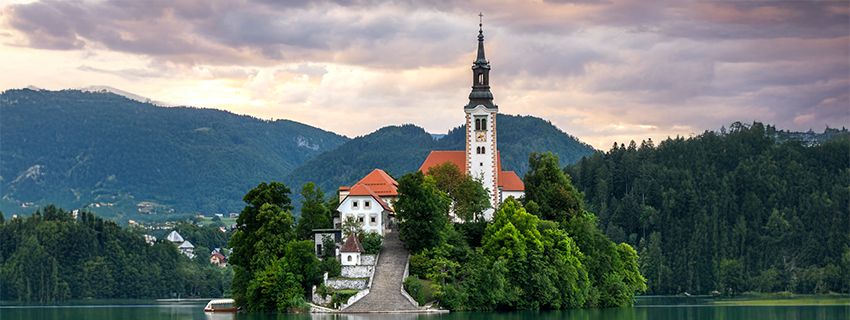
Lake Bled is the crown jewel of Slovenia’s lake district. In the Julian Alps, its turquoise water surrounds a tiny island with a Baroque church and a clifftop medieval castle. For centuries, visitors have flocked to Lake Bled’s shores for recreation and healing. The castle, founded in 1004, perches above the north shore as one of Europe’s most romantic lakeside fortresses. A traditional wooden “pletna” boat can ferry you to the island, and hiking trails offer panoramic views. Lake Bled is often called “one of the most beautiful Alpine lakes in Europe”.
Just 30 minutes west lies Lake Bohinj, Slovenia’s largest glacial lake, offering a more tranquil alpine experience. Its deep blue waters are framed by sheer peaks of Triglav National Park. On the southwest shore stands the little Church of St. John the Baptist, its white façade contrasting with pines and mountains. Bohinj is an oasis of pristine nature – you can rent kayaks, hike into the surrounding hills, or ride the historic Bohinj Railway through tunnels and gorges. Nearby, the Zelenci Wetland Reserve is a hidden gem: a small lake with brilliant emerald spring water that feeds the Sava River.
Alpine Peaks and Scenic Passes
Slovenia’s high country is dominated by the jagged Julian Alps, with Mount Triglav (2864 m) at its heart. These peaks offer epic road-trip scenery. The winding Vršič Pass (1611 m) is Slovenia’s highest mountain road, built during WWI and famed for its 50 hairpin turns. Driving Vršič is an adventure: you climb through pine forests and alpine meadows to a summit with 360° views. Along the way, you’ll pass the Russian Chapel memorial and sweeping panoramas of the surrounding peaks.
Another highlight is the drive through the Soča Valley. The road descending from Vršič follows the emerald-green Soča River through a narrow gorge. The Soca River route is considered “one of the most beautiful drives in Europe”. The river’s turquoise colour, limestone canyons and hidden waterfalls (such as the 52m Peričnik Waterfall) make every stop photogenic. The road is well-maintained but winding, so take your time – the views of rugged peaks and deep forests change with every bend.
Other alpine routes include the Mangart Road (one of Europe’s highest), the Logarska Dolina and Kranjska Gora – ideal for travellers seeking dramatic mountain landscapes. Nearly every mountain village from Bohinjska Bistrica to Kobarid can be reached by paved roads that connect high passes with tranquil valleys.
Coastal Charms on the Adriatic
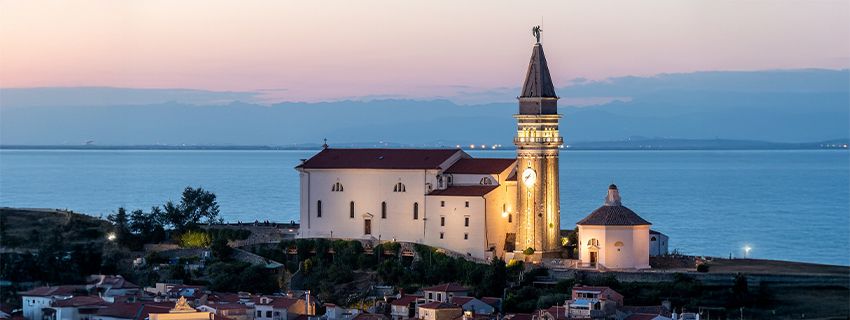
Surprisingly, Slovenia’s Adriatic coastline is just about 46 km long, but it packs Mediterranean flair. The highlight is Piran, a small Venetian-style town on a peninsula. Piran’s narrow cobbled streets, central Tartini Square and St. George’s Cathedral overlook the blue sea, making it one of Slovenia’s most photogenic spots. Nearby Portorož is a spa and seaside resort with upscale hotels and beaches.
Even a short drive along the coastal highway is scenic: it skirts cliffs and salt pans, with views out to Italy’s Gulf of Trieste. Traditional salt-making is still practised in the Sečovlje Saltpans Nature Park near Piran. In summer, you can swim or kayak in the warm Adriatic waters. Despite its brevity, the coastline feels worlds apart from the Alps, blending Mediterranean cuisine and Slovenian tradition. A car or small bus easily links the coast to the inland in under an hour, so you can day-trip between the sea and the mountains.
Historic Towns and Cultural Highlights
Slovenia’s rich history shows in its towns and architecture. The charming capital, Ljubljana, is half-ruin, half-Baroque revival: its 15th-century castle watches over a pedestrian-friendly old town with bridges, markets and cafés. Wander the Ljubljanica River promenade or sample local wine at an outdoor bistro. Ljubljana’s Plečnik-designed landmarks (from triple bridges to the National and University Library) are now UNESCO-listed heritage.
Outside the capital, don’t miss the medieval towns: Ptuj (Slovenia’s oldest town) with a hilltop castle and Roman relics, Škofja Loka with an intact old town and festivals, and Celje with mighty castle ruins. In southwestern Slovenia, Idrija (famous for its historic mercury mine and lace) and Lipica (home of the Lipizzaner horses) add unique cultural stops. The gut of Venice once reached Piran here, so the coast has red-roofed Venetian architecture and seafood taverns.
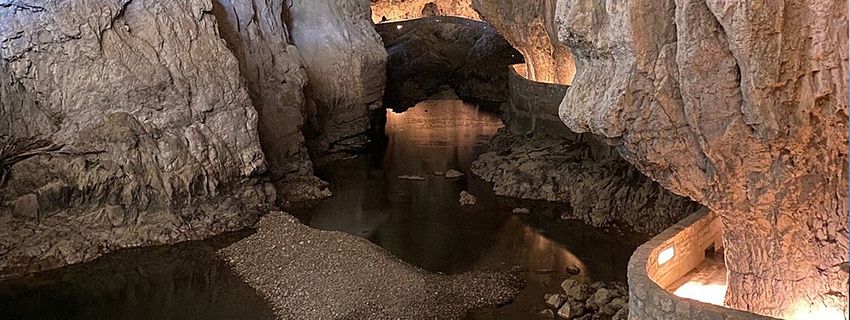
Nature lovers will also find UNESCO World Heritage sites: the Škocjan Caves (a vast underground karst canyon) and the primaeval beech forests in the mountains, as well as prehistoric Alpine pile-dwellings around theIg valley. Visiting Postojna Cave or Predjama Castle (near the Croatian border) is easy by car on your way from Ljubljana to the coast.
Hidden Gems and Adventure Spots
Beyond the headline sights, Slovenia’s backroads lead to surprising “hidden” places. In the Bohinj area, alpine trails like the Seven Triglav Lakes make for an overnight hiking adventure. The Logar Valley (Logarska dolina) in the Kamnik–Savinja Alps is a tranquil glacial valley lined by mountains, often less crowded than the Julian Alps. Above Kamnik, the Velika Planina plateau offers traditional alpine herdsmen’s wooden cottages and summer flower meadows with mountain views.
The Soca Valley itself hides ghostly WWI museums (Kobarid) and outdoor thrills (kayaking, ziplining). In the Karst region, villages like Lipica (horse farm) and Strunjan (coastal nature park) reward the curious traveller. In southern Slovenia, the Kolpa River valley (along the Croatia border) is a lesser-known spot for kayaking and quiet trails.
Even Ljubljana’s outskirts have surprises: the medieval Škofja Loka Passion Play (amateur theatre) and the Jerusalem wine route in the east. In short, on a Slovenia road trip every road feels like a discovery, with roadside stands selling honey, apple juice or local schnapps.
Slovenia Travel Tips and Practical Info
Planning a road trip through Slovenia is refreshingly simple. The country is compact, safe, and extremely traveller-friendly, making it ideal for self-drive explorations. From well-maintained highways to charming alpine roads, driving remains the most convenient way to experience the country’s lakes, mountains, and hidden villages.
Language and Currency
Slovenian is the official language, but travellers rarely face communication barriers. English is widely spoken, especially in cities, hotels, restaurants, and tourist areas. German and Italian are also understood in some regions of Slovenia due to its geographical location and historical influences.
The currency used in Slovenia is the Euro, which the country adopted in 2007. Credit cards are widely accepted, and ATMs are easily available in towns and cities. This makes payments convenient for international travellers exploring the country by road.
Highway Vignette System
Driving on Slovenian highways requires a toll vignette, which acts as a permit to use the motorway network. Instead of traditional toll booths, Slovenia uses a windshield sticker or digital e-vignette linked to your vehicle’s number plate.
Passenger vehicles weighing under 3.5 tonnes require a valid vignette to enter highways. Travellers can purchase a 7-day, monthly, or annual vignette either online or at fuel stations near border crossings. If you are renting a car, the vignette is often already included, but it is important to confirm this beforehand, as penalties for driving without one can be high.
Seasonal Driving Conditions
Slovenia’s mountainous terrain means that weather conditions can influence road accessibility. During winter, heavy snowfall affects alpine routes, and several high-mountain roads are closed for safety reasons. One of the most famous routes, the Vršič Pass, typically shuts down to vehicles during the winter months.
In general, many high-altitude roads and forest routes around Triglav National Park are inaccessible between November and April. For road trippers, the most comfortable driving season runs from late spring to early autumn, when alpine roads are open, and the landscapes are at their most vibrant. July and August are the busiest months, while September often offers beautiful autumn colours with fewer tourists.
Travel Infrastructure and Accommodation
Slovenia has excellent tourism infrastructure despite its small size. Petrol stations are common along highways and usually appear every 25–30 kilometres, ensuring that long drives through the countryside remain convenient.
Accommodation options are diverse and well-maintained. Travellers can choose from boutique hotels in cities, cosy guesthouses in alpine villages, and traditional countryside farm stays known locally as “tourist farms” or Družinske kmetije. These family-run properties offer authentic hospitality and home-cooked regional meals, making them a memorable part of a Slovenian road journey.
Local Cuisine to Try
Food in Slovenia reflects a blend of Alpine, Mediterranean, and Central European influences. Regional specialities vary depending on the landscape and local traditions.
In Lake Bled, the famous kremšnita cream cake is a must-try dessert and has become a symbol of the town. In the alpine regions and Soča Valley, dishes often feature fresh trout from mountain rivers, hearty stews, and game meats such as wild boar. Along the Adriatic coast, Mediterranean flavours dominate, with seafood, olive oil, and cured meats like prosciutto appearing on most menus.
Driving Rules and Safety
Driving in Slovenia is generally smooth and safe, but there are a few rules travellers should be aware of. Headlights must remain on at all times outside urban areas, even during the day. Vehicles are also required to carry safety equipment, including a reflective vest and a warning triangle.
Speed limits vary by road type. The maximum speed is 50 km/h in towns, 90 km/h on rural roads, 110 km/h on expressways, and 130 km/h on motorways. Some historic villages have narrow streets, so driving slowly and carefully is recommended.
Slovenia has strict drink-driving regulations, with a legal blood alcohol limit of 0.05%. Police frequently conduct roadside checks, so it is safest to avoid drinking before driving.
Getting to Slovenia
Most international travellers arrive via Ljubljana Jože Pučnik Airport, located about 25 kilometres from the capital. However, Slovenia’s central European location also makes it easy to reach by road from neighbouring countries such as Italy, Austria, and Croatia.
Travellers driving from Croatia should note that, although both countries are part of the Schengen zone, a Slovenian vignette is still required to use highways. If you are renting a car in another European country, it is best to purchase the vignette before crossing into Slovenia.
Driving Documents
Most European driving licences are accepted in Slovenia. However, travellers from countries outside Europe are often advised to carry an International Driving Permit (IDP) in addition to their domestic licence. Some car rental companies require it as an additional form of identification, so carrying one can help avoid complications when picking up your vehicle.
Written by
Damini Sharma
Damini has travelled the world solo, sometimes for work, primarily for self‑discovery, and now she explores full‑time! She enjoys slow, mindful travel & immerses herself in any country she visits. Working for AO, she transforms itineraries into adventures and destinations into dreams. Having explored the UAE, Indonesia, the Northeast, the Andaman Islands, and beyond, Damini writes from lived experience—capturing the sights, sounds, and soul of each journey. Whether drafting court‑worthy briefs or breathtaking travel blogs, Damini crafts experiences that invite readers to step into memory, embrace wonder, and discover deeper human connections.